The Manuscript is Off to the Publisher

I’ve been working on the second edition of Renegotiating Health Care: Resolving Collaboration to Build Collaboration with Lenny Marcus and Barry Dorn, both of the Harvard School of Public Health, for about 15 months. It feels great to have released the manuscript to Jossey-Bass.

I learned a lot about conflict resolution and negotiation as I edited those sections of the text — and a lot about the health care system through interviews that I conducted on the major trends that will shape health care over the next generation. These trends — system integration, empowered patients, technological advances, a more diverse workforce, and new definitions of trust — are at the heart of several chapters new to the second edition. I had the chance to speak with doctors, nurses, administrators, policy makers, and patients.

I end this first phase of the publication process encouraged as there are lots of smart people and organizations engaged in innovative initiatives to improve outcomes, lower costs, and rehumanize the patient experience. I am also discouraged because the so-called system is so resistant to change. There will be conflicts to be resolved and many, many things to negotiate — and hence the reason for updating this book.

The second edition should be out in 2011. It will be used primarily as a graduate school text. Next up: a book on leadership based on our work together at the National Preparedness Leadership Initiative.

Deepwater Horizon Recovery Up Close

Through my work at Harvard’s National Preparedness Leadership Initiative, I’ve had an extraordinary opportunity to meet some of the leaders of the Deepwater Horizon oil spill recovery efforts this past weekend. Limited connectivity, however, kept me from posting live and photographs were prohibited for security reasons in many locations. The days started with a 7 a.m. breakfast briefing and went until at least 9 p.m. and some days later. Long, yes, but far shorter than the shifts that many of the responders were putting in.

First, I have to say that the professionalism and deep expertise of those involved in the recovery is truly impressive. For those of you who are cynical about the government, put it on the shelf with regard to these folks. The Coast Guard, NOAA, and many other federal, state, and local agencies are putting in 20+ hour days, their scientific knowledge and concern for the environment are genuine, and attention is being paid at the highest levels.

These folks know what they are doing when it comes to responding to an oil spill and are concerned about the environmental impact from the spill. Pick on the regulators — they deserve it — but be glad that these responders are on hand. [Read more...]

Leadership and the Emotional Basement

Here’s a post that I published awhile back on the At Work Network. It is related to the work on meta-leadership in which I’m engaged at the National Preparedness Leadership Initiative at Harvard:

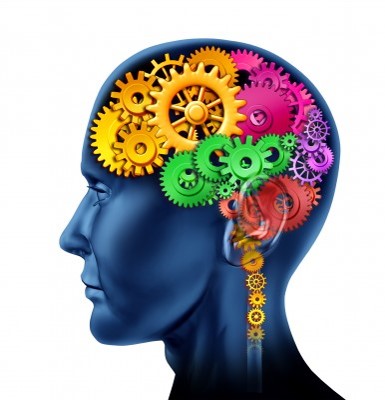
How much of your response in a crisis remains under your conscious control? If you are called upon to lead in a crisis, it is a question you should be prepared to answer. In physiological terms, your initial response is largely hard-wired. A sudden threat or crisis—be it a mugger, a fire, or to a lesser extent the announcement of a layoff—triggers the amygdala and the base of the brain, those parts of the brain activated by fear, distress, and anger. From here you will get a “fight, flight, or freeze” response. The brain is in survival mode and will suppress higher reasoning in order clear all channels for rapid action to mitigate the perceived threat.

This is the oldest part of the human brain (also known as the hindbrain); one we share with primates. This hard-wired capacity explains why you jump in fright during a horror movie even though, on a conscious level, you know that you are in no danger when the zombie with the knife leaps from the shadows. Your hindbrain takes over for a moment and invokes an involuntary response.

While the hindbrain can be an excellent asset in a threatening situation, it can inhibit effective leadership. In order to lead others, you need to be able to think at a higher level and make strategic decisions rather than panicked reactions. In fact, according to leadership authorities Richard Boyatzis and Annie McKee, prolonged arousal of the Sympathetic Nervous System (SNS) can deplete energy and hinder the ability to function and innovate.

The emotional basement

Dr. Barry Dorn of the Harvard School of Public Health calls this amygdala-controlled state “the emotional basement.” One characteristic of an effective leader in crisis, or “meta-leader” as Dorn and his colleagues have termed it, is to comprehend that you are in the basement and consciously climb out of it. How? One of the reasons that first responders have practiced procedures and protocols is that they trigger constructive activity and allow for reasoned decision making. It’s also why your organization practices fire drills. Think about what relevant, routine activity you can undertake to instill that calm in yourself. A simple one is to take a deep breath. Controlling your breathing is a great first step to restoring your control over your physical responses and allowing those parts of your brain that control reasoning to reassert dominance.

The second challenge, according to Dorn, is for you to understand that everyone around you is also likely to be in the “emotional basement.” You must help them climb up as well if you expect your followers to understand and follow direction. Again, simply asking everyone to take a deep breath is a good first step. Projecting calm and control will help engender it in others. Give clear, simple, concrete direction in a firm, controlled manner to project that you are in charge (e.g., “We’ll proceed down the West staircase and across the parking lot. Leave everything here and walk calmly out of the building.”)

Responding to complexity

In a more complex situation, give people specific tasks. If, for example, you are an IT or data security leader and your organization was the victim of a data breach, you would have someone check the activity logs, someone else check the firewalls, yet someone else examine recent server patches, etc. These would be tasks with which the people have familiarity; the routine will help them climb out of the basement. If you don’t have a task, make one up. To return to the movies, you’ve undoubtedly seen a scene in which an expectant father is panicked over the impending birth. The doctor (or other authority figure) will send him off to boil water. No one actually needs the boiling water but the simple, seemingly useful task helps the father focus and regain composure. This is usually played for comic effect on film but the underlying principle is actually sound advice.

These physiological responses explain why even the most laid back, non-hierarchical groups will long for the certainty of a command-and-control structure in a crisis situation. If leadership comprises authority, power, and influence, this is the time to leverage your authority and you will quickly discover how much you actually have. One of the reasons that leaders often rise from unexpected places during crisis is that true authority doesn’t always rest with the person formally in charge. People will follow the person they think can best lead to the far side of trouble.

“It takes great self-awareness, stamina, and discipline to control one’s gut-level responses in a stressful situation and intentionally elevate your mental activity out of ‘the basement’ and to bring others along with you,” says Dorn. “However, as a leader, it is the most important first step you can take.”

About

At Richer Earth, our overarching desire is to help create a society where as many people as possible can contribute to the fullest extent of their ability. To enable “as many people as possible,” we engage in work on leadership, social enterprise, and sustainability that expands opportunity and breaks down barriers that keep people from finding those opportunities. We use the word “contribute” because we believe that giving is at the root of personal and societal growth and fulfillment. “To the fullest extent of their abilities” gives voice to our belief that everyone has strengths and abilities — and that the design challenge we face is creating organizations and systems that make it possible for that talent to be unleashed. If this is achieved, we will have a Richer Earth — socially, environmentally, and economically — and thus the name for this site.

Follow us on Twitter @RicherEarth.